Tiffany Studios – A Legacy of Light and Color

Tiffany Studios Stained Glass – A Legacy of Light and Color Few names in American decorative arts hold as much prestige as Tiffany & Company, particularly in the realm of stained-glass windows. These breathtaking works of art, crafted by Louis Comfort Tiffany and his artisans, remain highly sought after by collectors and institutions alike. Their rich history, intricate craftsmanship, and enduring beauty make them not only artistic treasures but also valuable investments in the world of fine art and antiques. Louis Comfort Tiffany, son of the famed jeweler Charles Lewis Tiffany, revolutionized the art of stained glass in the late 19th and early 20th centuries. Unlike traditional stained glass, which relied on painting details onto colored panes, Tiffany developed a pioneering technique of layering and manipulating different types of glass to achieve unparalleled depth, texture, and realism. His studio’s innovations included: Favrile Glass: A unique, hand-blown iridescent glass that produced

Cigar Store Indians at Auction

Origins of Cigar Store Indians The tradition of using carved wooden figures to attract customers dates back to the 17th century in Europe, where shopkeepers used symbols like wooden Scotsmen for tobacco shops. When European settlers brought tobacco to the Americas, Native American imagery became associated with the product due to indigenous peoples’ early role in its cultivation and trade. By the early 19th century, American tobacconists began displaying life-sized wooden figures of Native Americans outside their shops as an advertising tool. These figures were typically hand-carved from wood and brightly painted, often depicting a Native American man or woman holding a bundle of cigars or a peace pipe. They were designed to be eye-catching, drawing in customers who may not have been able to read signage in an era of widespread illiteracy. Craftsmanship and Artistic Value Many of the finest cigar store Indians were carved by skilled artisans, particularly

The History and Value of First Nation Art: The Legacy of Bill Reid

First Nation art is one of the most profound and enduring artistic traditions in North America, reflecting deep cultural narratives, spiritual symbolism, and unparalleled craftsmanship. Among the most influential figures in this tradition is Bill Reid, a Haida artist whose work has shaped contemporary Indigenous art and brought global recognition to the rich heritage of the Haida people. His legacy, along with that of countless First Nation artists, continues to inspire collectors and art enthusiasts worldwide. At Stefek’s Auctioneers and Appraisers, we are honored to present a collection of First Nation art in our upcoming Masterpieces and Marvels auction. According to Lori Stefek, “Bill Reid’s work represents the pinnacle of Haida artistry and storytelling. His pieces carry both artistic and cultural weight, making them treasured additions to any collection.” The Origins of First Nation Art First Nation art has been practiced for thousands of years, with styles and motifs that

Jewelry Auctions

The Allure of Jewelry Auctions: What to Know Before You Bid

Jewelry auctions have a unique charm that captivates collectors and enthusiasts alike. From dazzling diamonds to rare vintage pieces, each auction offers a treasure trove of history, craftsmanship, and beauty. For seasoned bidders and newcomers alike, these events provide an exciting opportunity to acquire unique items with stories as rich as their design. If you are considering joining the world of jewelry auctions, here is what you need to know to make your experience both enjoyable and rewarding. The Appeal of Jewelry Auctions Auctions offer access to extraordinary pieces that you will not find in traditional retail stores. These include antique brooches, one-of-a-kind estate rings, and contemporary creations by world-renowned designers. Jewelry auctions are often a gateway to acquiring heirlooms—pieces that carry not only financial value but also emotional and historical significance. Beyond the allure of exclusivity, jewelry auctions can provide excellent value. With the right strategy, you may secure

Stefek’s Auctions Kicks off 2021 with Successful Winter Furniture and Décor Auction

Stefek’s Auctioneers & Appraisers’ first auction of 2021, the Winter Furniture and Décor Auction, was held on January 14, 2021 to much success. Bidders included individuals from 12 different countries including China, Poland, Italy, France, Switzerland, Spain, and the United Kingdom. Post-Auction Highlights include: Lot 64: Huta Ludwikow, Kielce Polish Cavalry Sword, sold for $5,250, over double the estimate of $1,000 – 2,000. Lot 62: Fulvio Bianconi, Venini Vase “A Fasce Verticali”, sold for $3,500, higher than the estimate of $2,000 – 3,000. Lot 46: Marble Abstract Twist Sculpture, sold for $1,625 against an estimate of $300 – 400. Lot 115: JBL Metregon Speaker Cabinet, sold for $5,250, exceeding the estimate of $1,500 – 2,500. Stefek’s Auctioneers & Appraisers is a full-service international auction house and estate liquidation management company headed by Lori Stefek, a Certified Appraiser of Personal Property (CAPP) with the International Society of Appraisers (ISA).  Lori has

Times to Remember

Bronzes after Remington and More Who was Frederic Sackrider Remington? You know a Remington sculpture (or one in his stye) when you see one. It’s iconic. It’s American.  It represents the quintessential Old West. Cast in bronze, many of the original works were created through the lost-wax casting process or the sand-casting method to provide utmost accuracy and detail. Several American art museums host his work, including the National Cowboy & Western Heritage Museum in Oklahoma City, the Metropolitan Museum of Art in New York City, and the Buffalo Bill Historical Center in Cody, Wyoming. Remington also has a museum dedicated to his art: the Frederic Remington Art Museum in Ogdensburg, New York. This museum, created from his estate, houses over 10,000 pieces of original works, personal artifacts, memorabilia, and more Born and raised in Canton, New York, Frederic Sackrider Remington in his time became famed for his drawings, paintings,

Royal Worcester porcelain

A Mark of Distinction

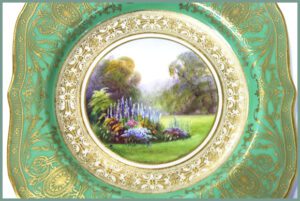
Renowned around the world for its exquisite porcelain ceramics, Royal Worcester was established in 1751 by Dr. John Wall, an eminent physician and apothecary. Dr. Wall pioneered a process that preserved the white, translucent characteristics of porcelain from China. Royal Worcester is still in operation, one of the oldest and most prestigious English porcelain brands. The company’s wares are recognized around the world for the quality of their craftsmanship. Wares produced before their royal warrant of 1788, as well as those produced at two other factories in Worcester, are known as Worcester porcelain. The most popular Royal Worcester pattern is “Evesham Gold” which features autumnal fruits from the Vale of Evesham and fine gold banding. First offered in 1961, it became very popular with its “oven to table” body. Stefek’s has a collection of eighteen jade green and gilt cabinet plates with hand painted fruit still lives signed “W.J. Bagnall.” Each plate is painted

Tiffany Studios – A Legacy of Light and Color

Tiffany Studios Stained Glass – A Legacy of Light and Color Few names in American decorative arts hold as much prestige as Tiffany & Company, particularly in the realm of stained-glass windows. These breathtaking works of art, crafted by Louis Comfort Tiffany and his artisans, remain highly sought after by collectors and institutions alike. Their rich history, intricate craftsmanship, and enduring beauty make them not only artistic treasures but also valuable investments in the world of fine art and antiques. Louis Comfort Tiffany, son of the famed jeweler Charles Lewis Tiffany, revolutionized the art of stained glass in the late 19th and early 20th centuries. Unlike traditional stained glass, which relied on painting details onto colored panes, Tiffany developed a pioneering technique of layering and manipulating different types of glass to achieve unparalleled depth, texture, and realism. His studio’s innovations included: Favrile Glass: A unique, hand-blown iridescent glass that produced

Cigar Store Indians at Auction

Origins of Cigar Store Indians The tradition of using carved wooden figures to attract customers dates back to the 17th century in Europe, where shopkeepers used symbols like wooden Scotsmen for tobacco shops. When European settlers brought tobacco to the Americas, Native American imagery became associated with the product due to indigenous peoples’ early role in its cultivation and trade. By the early 19th century, American tobacconists began displaying life-sized wooden figures of Native Americans outside their shops as an advertising tool. These figures were typically hand-carved from wood and brightly painted, often depicting a Native American man or woman holding a bundle of cigars or a peace pipe. They were designed to be eye-catching, drawing in customers who may not have been able to read signage in an era of widespread illiteracy. Craftsmanship and Artistic Value Many of the finest cigar store Indians were carved by skilled artisans, particularly

The History and Value of First Nation Art: The Legacy of Bill Reid

First Nation art is one of the most profound and enduring artistic traditions in North America, reflecting deep cultural narratives, spiritual symbolism, and unparalleled craftsmanship. Among the most influential figures in this tradition is Bill Reid, a Haida artist whose work has shaped contemporary Indigenous art and brought global recognition to the rich heritage of the Haida people. His legacy, along with that of countless First Nation artists, continues to inspire collectors and art enthusiasts worldwide. At Stefek’s Auctioneers and Appraisers, we are honored to present a collection of First Nation art in our upcoming Masterpieces and Marvels auction. According to Lori Stefek, “Bill Reid’s work represents the pinnacle of Haida artistry and storytelling. His pieces carry both artistic and cultural weight, making them treasured additions to any collection.” The Origins of First Nation Art First Nation art has been practiced for thousands of years, with styles and motifs that

Jewelry Auctions

The Allure of Jewelry Auctions: What to Know Before You Bid

Jewelry auctions have a unique charm that captivates collectors and enthusiasts alike. From dazzling diamonds to rare vintage pieces, each auction offers a treasure trove of history, craftsmanship, and beauty. For seasoned bidders and newcomers alike, these events provide an exciting opportunity to acquire unique items with stories as rich as their design. If you are considering joining the world of jewelry auctions, here is what you need to know to make your experience both enjoyable and rewarding. The Appeal of Jewelry Auctions Auctions offer access to extraordinary pieces that you will not find in traditional retail stores. These include antique brooches, one-of-a-kind estate rings, and contemporary creations by world-renowned designers. Jewelry auctions are often a gateway to acquiring heirlooms—pieces that carry not only financial value but also emotional and historical significance. Beyond the allure of exclusivity, jewelry auctions can provide excellent value. With the right strategy, you may secure

Stefek’s Auctions Kicks off 2021 with Successful Winter Furniture and Décor Auction

Stefek’s Auctioneers & Appraisers’ first auction of 2021, the Winter Furniture and Décor Auction, was held on January 14, 2021 to much success. Bidders included individuals from 12 different countries including China, Poland, Italy, France, Switzerland, Spain, and the United Kingdom. Post-Auction Highlights include: Lot 64: Huta Ludwikow, Kielce Polish Cavalry Sword, sold for $5,250, over double the estimate of $1,000 – 2,000. Lot 62: Fulvio Bianconi, Venini Vase “A Fasce Verticali”, sold for $3,500, higher than the estimate of $2,000 – 3,000. Lot 46: Marble Abstract Twist Sculpture, sold for $1,625 against an estimate of $300 – 400. Lot 115: JBL Metregon Speaker Cabinet, sold for $5,250, exceeding the estimate of $1,500 – 2,500. Stefek’s Auctioneers & Appraisers is a full-service international auction house and estate liquidation management company headed by Lori Stefek, a Certified Appraiser of Personal Property (CAPP) with the International Society of Appraisers (ISA).  Lori has

Times to Remember

Bronzes after Remington and More Who was Frederic Sackrider Remington? You know a Remington sculpture (or one in his stye) when you see one. It’s iconic. It’s American.  It represents the quintessential Old West. Cast in bronze, many of the original works were created through the lost-wax casting process or the sand-casting method to provide utmost accuracy and detail. Several American art museums host his work, including the National Cowboy & Western Heritage Museum in Oklahoma City, the Metropolitan Museum of Art in New York City, and the Buffalo Bill Historical Center in Cody, Wyoming. Remington also has a museum dedicated to his art: the Frederic Remington Art Museum in Ogdensburg, New York. This museum, created from his estate, houses over 10,000 pieces of original works, personal artifacts, memorabilia, and more Born and raised in Canton, New York, Frederic Sackrider Remington in his time became famed for his drawings, paintings,

Royal Worcester porcelain

A Mark of Distinction

Renowned around the world for its exquisite porcelain ceramics, Royal Worcester was established in 1751 by Dr. John Wall, an eminent physician and apothecary. Dr. Wall pioneered a process that preserved the white, translucent characteristics of porcelain from China. Royal Worcester is still in operation, one of the oldest and most prestigious English porcelain brands. The company’s wares are recognized around the world for the quality of their craftsmanship. Wares produced before their royal warrant of 1788, as well as those produced at two other factories in Worcester, are known as Worcester porcelain. The most popular Royal Worcester pattern is “Evesham Gold” which features autumnal fruits from the Vale of Evesham and fine gold banding. First offered in 1961, it became very popular with its “oven to table” body. Stefek’s has a collection of eighteen jade green and gilt cabinet plates with hand painted fruit still lives signed “W.J. Bagnall.” Each plate is painted